

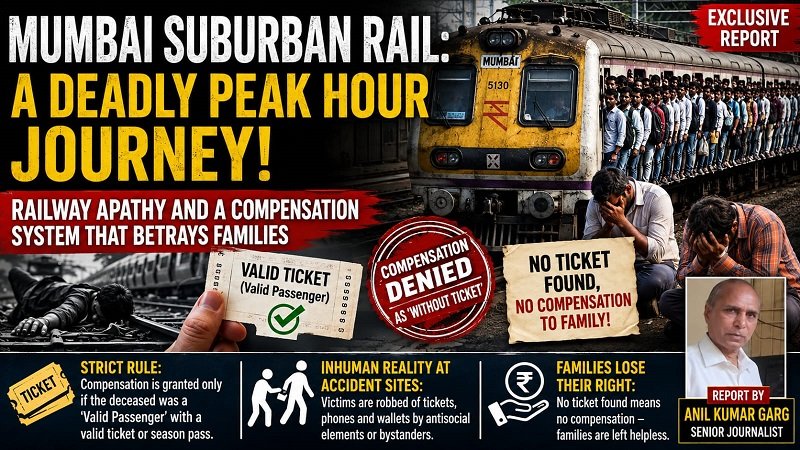
MUMBAI: For millions of daily commuters traveling into Mumbai from the suburban belts of Karjat, Kasara, Badlapur, Ambernath, Asangaon, Titwala, Khopoli, Kalyan, and Dombivli, the morning commute on Central Railway has escalated from a grueling routine into a daily gamble with life.
The grim reality of this suburban transit crisis was underscored once again near Mumbra Creek, where 24-year-old Ulhasnagar resident Sairaj Benare lost his life after falling from an overcrowded train during peak hours.
Peak-Hour Horror: When Boarding Means Risking Life
Commuters navigating the morning rush hours understand that entering a packed compartment or standing near the footboard carries extreme risk. Despite passengers taking maximum precautions, a minor slip, a sudden surge in the crowd, or an inadvertent push from fellow passengers frequently leads to fatal accidents.
Despite the recurring fatalities, the railway management continues to disown direct responsibility, citing infrastructure limitations. According to Central Railway officials, the tracks between CSMT and Karjat-Kasara are operating well beyond 100% capacity. The administration maintains that running additional local trains or increasing service frequency on this corridor is technically impossible under current track constraints.
Unimplemented Solutions and Administrative Apathy
Over a year ago, Swapnil Nila, the Chief Public Relations Officer of Central Railway, highlighted a potential remedy during a press interaction: restructuring office hours across corporate and government sectors in Mumbai. Shifting standard 10:00 AM start times to staggered afternoon shifts was proposed to reduce peak-hour congestion. However, no concrete administrative policy or inter-departmental coordination has been initiated to execute this proposal.
The Compensation Paradox: Bureaucracy Strips Victims’ Rights
The tragedy for victims’ families is compounded long after the fatal accident occurs. Obtaining financial compensation from the railways has become an arduous legal ordeal, with over half the claims being rejected on procedural grounds.
The Valid Ticket Mandate: Railway regulations strictly stipulate that compensation is payable only to a “valid passenger” holding an active single-journey ticket or season pass at the time of the incident.
The On-Scene Theft Loophole: In many instances, opportunistic individuals or onlookers steal the victim’s wallet, phone, and belongings before official help arrives. When railway police inspect the site, the absence of physical travel credentials leads the administration to categorize the deceased as an “unticketed passenger,” rendering the grieving family ineligible for official compensation.
As suburban railway casualties continue to mount on the Kalyan-Kasara and Kalyan-Karjat sectors, public outrage is growing over the lack of systemic infrastructure upgrades, policy inaction on staggered work hours, and rigid compensation criteria that leave victims’ families without relief.