

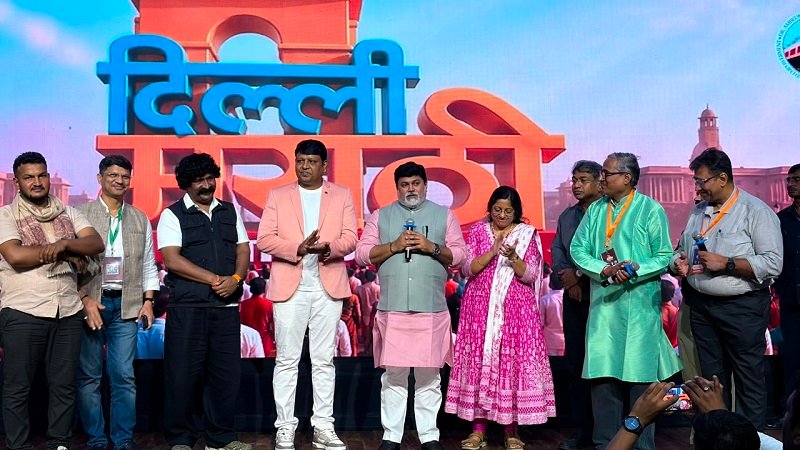
Interacts with the Audience at the Delhi Marathi Film Festival
New Delhi: Marathi cinema has crossed the boundaries of Maharashtra to establish its distinct identity nationally and internationally. Today, Marathi films have reached global platforms due to the tireless efforts of directors, producers, actors, and technicians, showcasing Marathi language and culture prominently in the nation’s capital, stated Maharashtra’s Minister for Marathi Language, Uday Samant.
He was speaking during an interaction with the audience after visiting the ‘Delhi Marathi Film Festival,’ organized by the Delhi Marathi Pratishthan in collaboration with the Government of Maharashtra. The grand festival was inaugurated with great enthusiasm yesterday.
The event saw the gracious presence of Shweta Singhal, Resident Commissioner of the Government of Maharashtra; Prashant Sajanikar, Co-Managing Director of the Maharashtra Film, Theatre and Cultural Development Corporation; and Hemraj Bagul, Director of the Maharashtra Information Centre. Renowned filmmakers Pravin Tarde (Director of Deool Band 2) and Nilesh Jalamkar (Director of Satyashodhak) were also specially present and interacted with the audience.
Expressing satisfaction over the overwhelming response to Marathi films in Delhi, Minister Samant highlighted the need to effectively present Maharashtra’s rich art, culture, and traditions to the people of the capital. Suggesting the organization of a large-scale Ganeshotsav in Delhi, he remarked that such an event would offer residents a direct and broader experience of Maharashtra’s cultural heritage, leaving a stronger cultural footprint in the capital. He further emphasized that Marathi cinema should not remain confined to Mumbai and Pune but should reach various parts of the country. He suggested prioritizing Marathi film festivals in cities with historical ties to Marathi culture, such as Thanjavur and Vadodara.
To ensure that the Marathi language, people, and culture are recognized across every state, various cultural initiatives—including film festivals—must be organized nationwide and internationally. He assured full government assistance to create a wider recognition of Marathi culture. Sharing updates on government efforts for the global promotion of the Marathi language, he announced that a grant of ₹30 lakh has been approved for the Marathi language initiatives and the upcoming convention of the Bruhan Maharashtra Mandal in the USA. He reiterated that the government provides complete backing to overseas Marathi communities to preserve their language, culture, and traditions, and will leave no stone unturned to strengthen the influence and presence of Marathi people across all states.
Meanwhile, today marked the second day of the film festival, featuring screenings of acclaimed Marathi films such as Tumbadchi Manjula, Ghubad Kund, Sthal, and Phullwanti. Minister Samant commended the enthusiastic turnout and response from Delhi’s Marathi community, stating that the prominent space gained by Marathi cinema, language, and culture on New Delhi’s cultural canvas is a matter of great pride.
During the event, Vivek Garge of the Delhi Marathi Pratishthan felicitated Minister Uday Samant.
In the morning session, Prof. Milind Damle from the Film and Television Institute of India (FTII) conducted a special session for film scholars, which included the screening of several significant documentaries